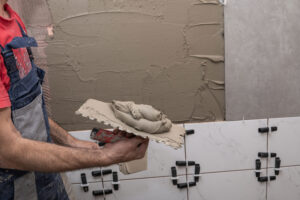
Tile replacement in an Oregon home is more complicated than just looking up the cost. The final cost depends on the tile material, the condition of the existing substrate, the complexity of the layout, and whether the subfloor needs repair before installation. Tile replacement cost in Southern Oregon cities like Medford, Ashland, and Grants Pass normally ranges between $7 and $35+ per square foot for a complete tile replacement project, which covers both materials and labor. This guide breaks down what factors affect the total cost so you can budget accurately before you start your tile replacement project. South Oregon Tile offers a free estimate of tile replacement costs for Oregon homeowners.
What Does Tile Replacement Cost in Oregon?
Tire Replacement and Installation
Tile replacement costs in Oregon vary widely based on materials and labor combined. The wide range exists because a basic ceramic backsplash replacement and a large-size porcelain bathroom floor replacement are different projects that require different skills, time, and material requirements.
The table below gives Oregon homeowners a realistic estimate of tile replacement costs in 2026 by tile type.
| Tile Type | Material Cost (per sq ft) | Labor Cost (per sq ft) | Total Estimated Cost |
| Ceramic | $1 – $5 | $5 – $9 | $6 – $14 |
| Porcelain | $3 – $10 | $6 – $12 | $9 – $22 |
| Natural Stone | $7 – $20 | $8 – $15 | $15 – $35 |
| Glass | $10 – $30 | $8 – $20 | $18 – $50 |
| Cement | $5 – $15 | $5 – $10 | $10 – $25 |
Labor rates in Southern Oregon depend on local market conditions, installer certification level, and project complexity. A flat shower floor with mosaic tile costs more in labor than a straightforward rectangular floor with large-format porcelain.
What Factors Affect Tile Replacement Costs in Oregon?
The factors that affect tile replacement costs in Oregon are Oregon’s climate, which has higher moisture levels, labor of remodeling, the complexity of the project, and the location within the home. These factors inevitably push Oregon tile replacement costs upward.
Subfloor Moisture and Substrate Repair
Oregon’s wet winters cause concrete slabs and wood subfloors to hold higher moisture levels for extended periods. Before any tile replacement begins, a qualified installer tests substrate moisture using ASTM F2170 in-situ relative humidity testing. Readings above 75% RH require corrective action, which adds cost before a single tile is set.
Wood subfloor repairs in older Southern Oregon homes run between $3 and $10 per square foot on top of tile installation costs. Installers may need to add cement backer board, apply waterproofing membranes, or sister floor joists before the substrate meets TCNA standards for tile bonding.
Remodeling and Old Tile Removal
Remodeling old installations and tile removal is a labor-intensive procedure and adds between $2 and $7 per square foot to most replacement projects. The cost depends on the thickness of the existing mortar bed, whether the tile was installed with epoxy adhesive, which bonds harder and takes longer to break, and on any damage to the substrate during removal. Installers use floor scrapers, chisels, and grinding equipment to clear the surface without compromising the subfloor, which adds to the total cost of tile replacement.
Layout Complexity and Pattern Type
Straight-lay tile patterns have the lowest labor cost, while diagonal layouts, herringbone patterns, and offset brick patterns increase cutting time and material waste by 10 to 20 percent. Large-format tiles above 24×24 inches require perfectly flat substrates, which requires self-leveling compound before installation and adds $1 to $3 per square foot to the project.
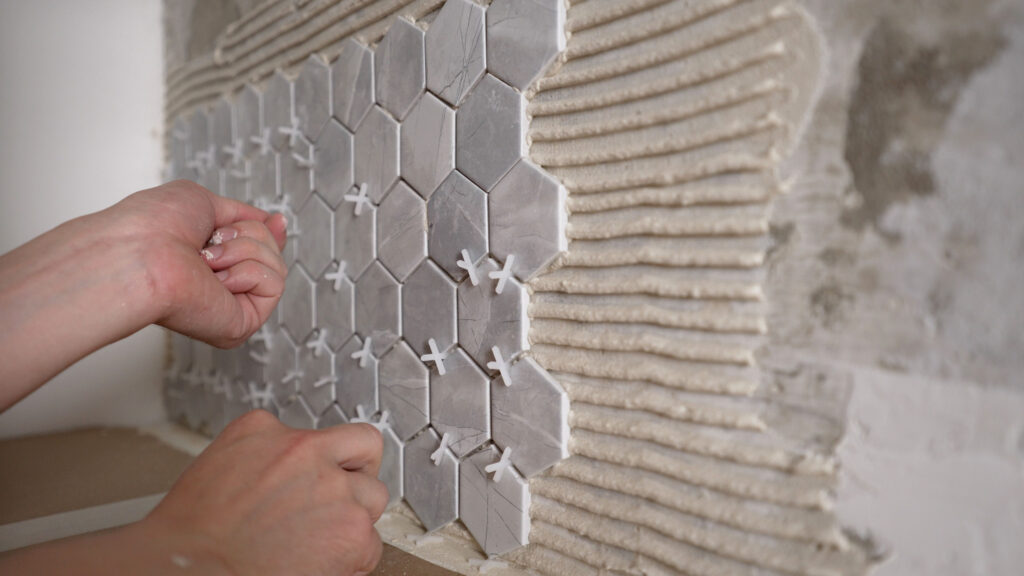
Custom mosaic work, feature walls, and decorative borders require hand-cutting and precise back-buttering that slows the installation rate significantly, and installers charge more per square foot for these applications because the margin for error is much smaller.
Location Within the Home
Shower walls and wet room floors carry higher labor costs than standard floor tile replacement because TCNA standards require 95% mortar coverage behind every tile in direct-water-contact areas, compared to 80% for standard applications. Installers also spend more time waterproofing seams, corners, and penetrations in wet areas to prevent moisture infiltration, which causes molding behind the tile.
How Much Does Tile Replacement Cost by Room in Oregon?
Tile replacement cost varies by room in Oregon, and understanding room-specific estimates helps Oregon homeowners set realistic budgets before requesting quotes.
- Bathroom Floor (50 to 100 sq ft): A standard bathroom floor replacement using porcelain tile in Medford or Ashland runs between $800 and $2,500 total, which includes removal, substrate preparation, tile, and installation. Tile with a COF (coefficient of friction) wet rating above 0.42 per ANSI A137.1 is the correct specification for bathroom floors.
- Shower Walls (60 to 120 sq ft): Shower wall tile replacement costs between $1,200 and $4,500, which depends on tile material and layout complexity. Glass tile shower walls cost higher because they require white epoxy mortar, precise back-buttering, and strict substrate flatness to avoid visual distortion through the tile face.
- Kitchen Floor (100 to 200 sq ft): Kitchen floor replacements using textured porcelain or slate with PEI ratings of 4 to 5 usually cost between $1,500 and $5,000. Kitchen floors handle heavy foot traffic and regular spills, so material quality directly affects long-term performance in Oregon homes.
- Kitchen Backsplash (20 to 40 sq ft): Backsplash replacement is a relatively affordable tile project, which costs between $400 and $1,500 for ceramic or glass tile. The smaller square footage reduces the total cost even when using premium materials.
- Mudroom or Entryway (30 to 80 sq ft): Mudrooms in Oregon handle wet boots, tracked mud, and road debris throughout a long rainy season, so dense porcelain or slate is the correct material choice here, that costs between $600 and $2,000.
What Hidden Costs Should Oregon Homeowners Expect?

Tile Installation Done By A Professional in OR
The hidden costs that Oregon homeowners should expect include tile acclimation time, expansion joint installation, grout sealing, and annual maintenance. These hidden costs may surprise homeowners who have not replaced tile before.
Tile acclimation time does not add a direct dollar cost, but it adds 48 hours to project timelines. Tiles brought in from storage need to sit in the installation space to adjust to the room temperature and humidity before setting. Skipping this step causes post-installation expansion and grout cracking.
Expansion joint installation is required every 20 to 25 feet in interior applications per the TCNA Handbook. Oregon’s seasonal humidity causes tile to expand, and without joints, grout cracks under pressure. Installers who skip expansion joints cut upfront cost but create premature failure.
Grout sealing and annual maintenance applies to natural stone and cement tile installations. Stone tile requires sealing every 1 to 2 years to prevent moisture infiltration and staining, and that ongoing cost must be considered in any homeowner’s long-term budget for these materials.
Getting an Accurate Tile Replacement Estimate in Southern Oregon
The most accurate way to budget a tile replacement project is to have an installer assess the existing substrate condition, measure the space, and account for the specific material and layout you want. Published ranges give you a starting framework, but substrate repairs, removal complexity, and pattern choices affect the total costs that a general guide cannot predict.
South Oregon Tile provides free tile replacement estimates for homeowners in Medford, Ashland, Grants Pass, and surrounding Southern Oregon communities. Contact the team to get a project-specific cost before your tile replacement begins.
FAQs
Can I install new tile directly over my old tile to save money?
Technically, yes, you can install “tile-over-tile” with specific bonding primers to save money, but in Oregon, it is not recommended. This method adds significant weight to your floor joists and raises the floor height, which creates tripping hazards at doorways. It also hides potential moisture damage or mold in the subfloor, so a full tear-out is the safest investment for your home’s structural integrity in Oregon’s damp climate.
How long does a typical tile replacement project take in Southern Oregon?
A standard bathroom floor (50–80 sq. ft.) usually takes 3 to 5 days, which includes one day for demolition and substrate prep, one to two days for setting the tile, and a final day for grouting and sealing. However, Oregon’s humidity requires strict adherence to “cure times” for thin-set and waterproof membranes, and premature foot traffic or grouting can lead to loose tiles and cracked grout lines.
What is the best grout for Oregon’s wet climate?
For kitchens and bathrooms, high-performance epoxy or high-quality cementitious grout with integrated sealers is the best grout for Oregon’s wet climate. Epoxy grout is non-porous, which makes it highly resistant to mold and mildew. While it is more difficult to install and carries a higher labor cost, it never requires resealing and provides a nearly waterproof barrier that protects your subfloor from moisture infiltration.